


In the modern digital world, our identity is a paradox. It is our most personal and valuable asset, yet it is scattered across a vast network of centralized databases, from social media giants and online retailers to government agencies and banks. This system, built on a foundation of trust in a few powerful intermediaries, has created a number of significant flaws: a constant risk of data breaches, a lack of user control, and a digital identity that is not truly our own. Every time we log into a new service, we are forced to give up a piece of ourselves, with no real say in how our data is used or who has access to it.
But a profound and necessary shift is underway. A new and revolutionary model, known as Decentralized Identity (DID), is poised to fundamentally reshape this landscape. DID is not a new form of a password or a new form of a username; it is a new paradigm of identity that is built on the principles of blockchain technology and self-sovereignty. It is a world where a person has true ownership and control over their identity, with no need for a central authority or a powerful corporation to act as an intermediary. This is a transformation that will not only change how we log in but will also fundamentally redefine our relationship with our own identities, with our data, and with our world. This article will provide a comprehensive guide to what a decentralized identity is, the key pillars that are driving its revolution, the major industries that are being transformed, and the profound ethical and technological challenges that this new technology holds for the future of humanity.
The Centralized Identity System
To understand the power of a decentralized identity, one must first grasp the flaws of the traditional centralized identity system. This old paradigm, while effective for a long time, has a number of significant flaws that are becoming increasingly apparent in a modern world.
- A Constant Risk of Data Breaches: A centralized identity system is a single point of failure. When a powerful corporation or a government agency stores the personal information of millions of people, it becomes a high-value target for hackers. A single data breach can expose the personal information of millions of people, with devastating consequences.
- Lack of User Control: In a traditional identity system, a person has very little control over their personal information. They are forced to give up a piece of themselves every time they log into a new service, with no real say in how their data is used or who has access to it.
- The “One-Size-Fits-All” Model: A traditional identity system is a “one-size-fits-all” model. A person is forced to use a single, static identity for all of their online interactions. They have no ability to, for example, share a piece of information with one service and not with another.
- A Lack of Portability: A person’s identity is often locked into a specific service or a specific platform. It is a cumbersome and difficult process to move a person’s identity to a new platform, and it is a major barrier to a person’s a new and more open digital world.
The old paradigm is no longer viable. It is a system that is built for a different era, and it is now being replaced by a new one that is more resilient, more regenerative, and more equitable.
A Primer on Self-Sovereignty
A decentralized identity is a new model for a digital identity that is designed to solve the flaws of the traditional paradigm. It is a technological leap that is built on a new generation of technologies.
- A Self-Sovereign Identity: The core principle of a decentralized identity is self-sovereignty. A person has true ownership and control over their identity, with no need for a central authority or a powerful corporation to act as an intermediary.
- A Decentralized Ledger: A decentralized identity is not stored on a central server; it is stored on a decentralized ledger, such as a blockchain. This gives a person a new level of security and a new level of privacy, as the data is not a single point of failure.
- A Set of Cryptographic Keys: A decentralized identity is a set of cryptographic keys. A public key is a person’s a unique digital address, and a private key is a secret key that is used to control a person’s identity. The private key is a person’s a new and more powerful form of a password.
The decentralized identity revolution is a new chapter in the story of human identity, one that is being written by a new generation of visionaries and entrepreneurs.
Key Pillars of the DID Revolution
The decentralized identity revolution is built on a set of core principles that are fundamentally changing the way we think about identity. These principles are making identity more secure, more private, and more portable than ever before.
A. Self-Sovereign Identity:
This is the most significant advantage of a decentralized identity. A person has true ownership and control over their identity.
- No Central Authority: A person has no need for a central authority to verify their identity. A person can, for example, use a set of cryptographic keys to verify their identity, with no need for a powerful corporation or a government agency to act as an intermediary.
- A New Level of Control: A person has a new level of control over their personal information. They can, for example, choose to share a piece of information with one service and not with another.
B. Verified Credentials and Trustless Verification:
A decentralized identity is a new and more powerful way to verify a person’s identity.
- Verified Credentials: A person can, for example, use a set of verified credentials—a digital document that is a cryptographic proof of a person’s a identity, such as a driver’s license or a passport.
- Trustless Verification: The use of a verified credential allows a person to verify their identity without a central authority. This is a new and more transparent way to verify a person’s identity.
C. The “Right to Be Forgotten” and Data Minimization:
A decentralized identity is a new and more powerful way to protect a person’s privacy.
- The “Right to Be Forgotten”: In a decentralized identity, a person has a new and more powerful form of a “right to be forgotten.” A person can, for example, revoke a service’s access to their data, and the data will be deleted from the service’s a database.
- Data Minimization: A decentralized identity is a new and more powerful way to protect a person’s privacy. A person can, for example, choose to share a piece of information with one service and not with another, which can help to reduce the amount of personal information that is collected and stored.
D. Portability and Interoperability:
A decentralized identity is a new and more powerful way to protect a person’s privacy.
- A Portable Identity: A person can, for example, have a single, portable identity that they can use across a variety of platforms. This is a new and more convenient way to log in, and it is a new and more secure way to protect a person’s identity.
- A New Social Graph: The use of a decentralized identity can, for example, be a new and more direct way for a person to connect with their friends and their community. A person can, for example, take their “social graph” with them to a new platform, which makes it easier for a new platform to get started.
Major Industries Being Transformed
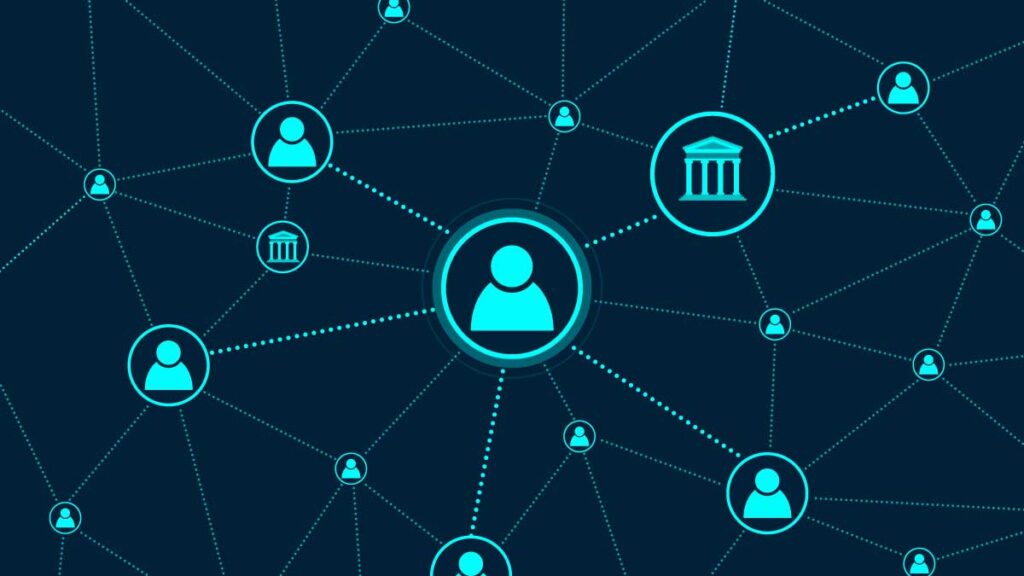
The impact of a decentralized identity is not limited to a single sector; it is a transformative force that is reshaping every industry.
- Finance and Banking: The financial and banking industries are on the cusp of a revolution. A decentralized identity can be used to create a new generation of secure and private financial services.
- Healthcare and Medical Records: The healthcare and medical records industries are on the cusp of a revolution. A decentralized identity can be used to give a person true ownership and control over their medical records.
- E-commerce and Online Services: The e-commerce and online services industries are on the cusp of a revolution. A decentralized identity can be used to create a new generation of secure and private online services.
- Government and Public Services: The government and public services industries are on the cusp of a revolution. A decentralized identity can be used to create a new generation of secure and private government services.
The Technological and Legal Challenges
While the potential of a decentralized identity is immense, the path to widespread adoption is not without its challenges. The technology is still in its early stages, and the regulatory framework is struggling to keep up with the pace of innovation.
- High Initial Cost: The cost of building a decentralized identity system, particularly a large one, can be high. This can be a major barrier to adoption for a small business or a community that is operating on a tight budget.
- The Lack of a Legal Framework: The legal status of a decentralized identity is still in its early stages, and there is a risk of a regulatory action. The legal question is what, exactly, a decentralized identity is, and what is the legal liability for a person who creates a new decentralized identity?
- The “Human” Question: The rise of a decentralized identity is forcing a deeper, philosophical debate over what it means to be human. If a person can have a digital identity that is not controlled by a central authority, are they still human? The legal and ethical implications of this question are profound.
Conclusion
The decentralized identity revolution is not just another technological advancement; it is a fundamental re-imagining of our relationship with our own identities, with our data, and with our world. It has the power to unlock new levels of security, privacy, and a new sense of a person’s a unique identity. The companies and governments that are leading this charge are not just building a new technology; they are laying the foundation for a new social contract.
The future of identity will not be defined by a world where a person’s identity is a commodity that is traded on a global market. Instead, it will be defined by a world where a person has a new level of control over their identity, and where a company is held accountable for its use. The journey is far from over, but the progress has been undeniable. The most successful societies of the future will be those that can master the principles of a decentralized identity and use them to create a more efficient, more creative, and more equitable world.










Discussion about this post